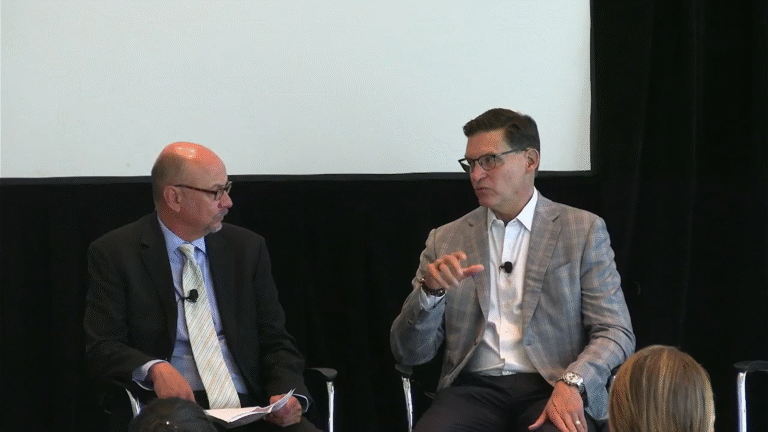
Despite ongoing economic pressures on grocery shoppers and the looming threat of tariffs, there’s plenty of reason for optimism for the retail industry in 2025, says Advantage Solutions CEO Dave Peacock.
With inflation moderating, consumers are able to wield more purchasing power on their shopping trips. New tech advancements will help brands and retailers grow sales. And a healthy labor market combined with a pipeline of new product innovation should help boost consumption, giving a shot in the arm to brands and retailers weathering shifting market conditions.
Trends influencing food retail trends in 2025
Those topics and more will be top of mind as leading consumer goods manufacturers and retailers gather at this year’s FMI Midwinter Executive Conference in Marco Island, Fla.
In advance of the year’s first key gathering of executive-level food retail industry players, Peacock, also a member of the board at FMI-The Food Industry Association, shared his thoughts on the trends that will shape the year ahead in the food retail trends — and how Advantage will work with brands and retailers to make it a successful year.
“In terms of my expectations for the industry, I am optimistic that the second half of ’25 will feel better to people in the consumer space,” Peacock said. “As brands and retailers have refined their pricing, as innovations that companies are working on start taking off, and as they focus on strategies that will drive unit movement within the industry, those should start bearing fruit in the second half of ’25. So, I’m bullish.”
According to the most recent Advantage Outlook, an industry-leading survey of senior-level executives’ expectations at leading retailers and consumer products companies across the U.S., more than 85% of retailers expect to see unit volume growth in their individual business in 2025, while 80% of surveyed manufacturers anticipate unit volume growth, mostly in the 1% to 4% growth range.
Here are some of the trends Peacock and Advantage have their eyes on in 2025.
Inflation and the economy
“As inflation continues to moderate, you should see growing consumer confidence,” Peacock said. “And I do think the farther you get away from an election, you generally get better consumer sentiment.”
While grocery prices remain high compared with a few years ago, inflation is slowing to a more historically normalized rate, which eventually will take some pressure off consumers, he said.
And while changes in economic and trade policy, including tariffs, are likely to create uncertainty and filter throughout the economy. Even though he doesn’t expect tariffs to have as significant of an effect on food, “it will have an impact, and companies are adjusting and trying to manage around that,” Peacock said.
Advantage, he said, has been working through those issues with clients, noting the company’s “deep experience helping our clients survive and thrive, regardless of market conditions.”